
Another fun side-by-side comparison this week is Bulleit Bourbon vs Bulleit Rye. It’s the perfect tasting if you’ve ever wondered what really separates a bourbon from a rye whiskey.
On paper, these two American whiskeys have plenty in common. They’re made by the same brand, matured in new charred oak barrels, bottled at the same strength, and even share a similar amber colour. In some cases, they even smell remarkably alike.
The real differences only become apparent once you start digging into the mash bill and, more importantly, tasting them side by side.
Comparing a high-rye rye whiskey against a bourbon that also contains a relatively high percentage of rye makes this one of the best comparisons for understanding how grain recipes influence flavour.
Let’s start with the basics.
Bourbon Whiskey vs Rye Whiskey
Although bourbon and rye whiskey are both distinctly American styles, the biggest difference lies in the grain used to make them.
Bourbon can only be produced in the United States. To qualify as bourbon, it must be distilled from a mash bill containing at least 51% corn. The remainder usually consists of rye, wheat and malted barley.
Every bourbon must be matured in new charred oak barrels. There is no minimum ageing requirement for bourbon, although Straight bourbon must be aged for at least two years.
Rye whiskey can be produced around the world, but to be labelled American Rye Whiskey, it must contain at least 51% rye grain in the mash bill. (Michter’s Single Barrel Kentucky Straight Rye or the Pikesville Straight Rye whiskey)
Like bourbon, it must be matured in new charred oak barrels and bottled at a minimum of 40% ABV. The flavour profile changes dramatically depending on how much rye is used.
A rye whiskey made with just over 51% rye can still share many similarities with bourbon. However, high-rye expressions, such as Bulleit Rye, deliver a far bolder character with pepper, herbs, mint and baking spices taking centre stage.
The Story Behind Bulleit Frontier Whiskey
The Bulleit story dates back more than 150 years. According to the brand, Augustus Bulleit created a distinctive high-rye whiskey recipe in Louisville, Kentucky, sometime between 1830 and 1860. His recipe reportedly consisted of approximately 67% rye and 33% corn, making it unusually rye-forward for its time.
More than a century later, his descendant, Tom Bulleit, revived the family recipe. After serving in the US Marine Corps and later practising law, Tom left his legal career to pursue his passion for whiskey. In 1987, he launched Bulleit Bourbon, introducing the now-famous Frontier Whiskey to a new generation of drinkers.
Today, the Bulleit brand is owned by Diageo and produced in Kentucky.
Also Read: Laphroaig 10 vs Quarter Cask Whisky
Bulleit Bourbon Frontier Whiskey
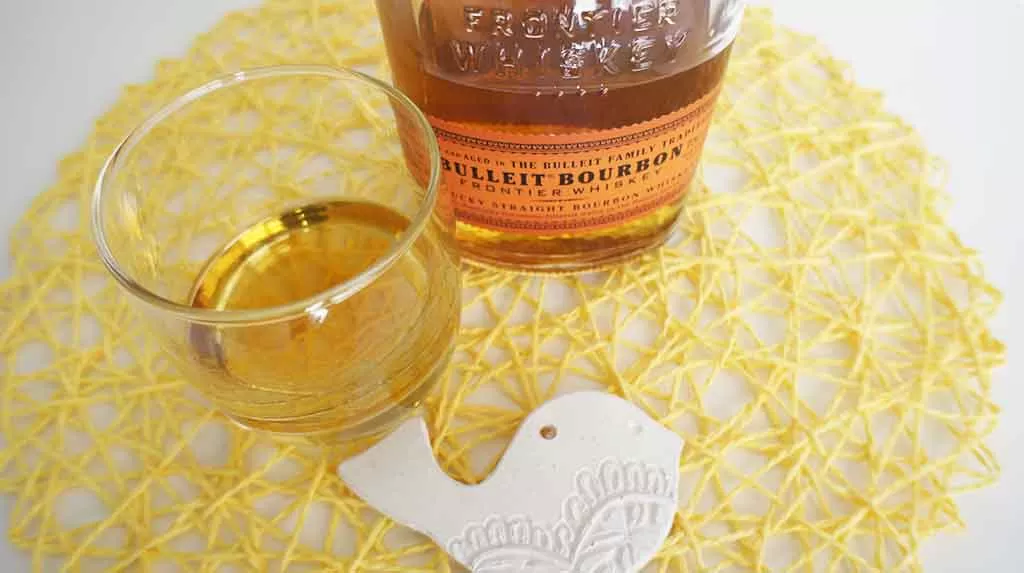
Bulleit Bourbon carries no age statement but is generally believed to be matured for around six years in heavily charred American white oak barrels. The mash bill consists of 68% corn, 28% rye and 4% malted barley.
Despite being a bourbon, the unusually high rye content gives it more spice than many competing bourbons while still retaining its signature sweetness. It remains one of the best-value premium bourbons on the market, and I have spotted it on Amazon. The Bulleit Bourbon works well with a pecan pie, bacon-wrapped dates and rich meaty venison stew.
Also Read: Woodford Reserve vs Bulleit Bourbon
Bulleit 95 Rye Frontier Whiskey
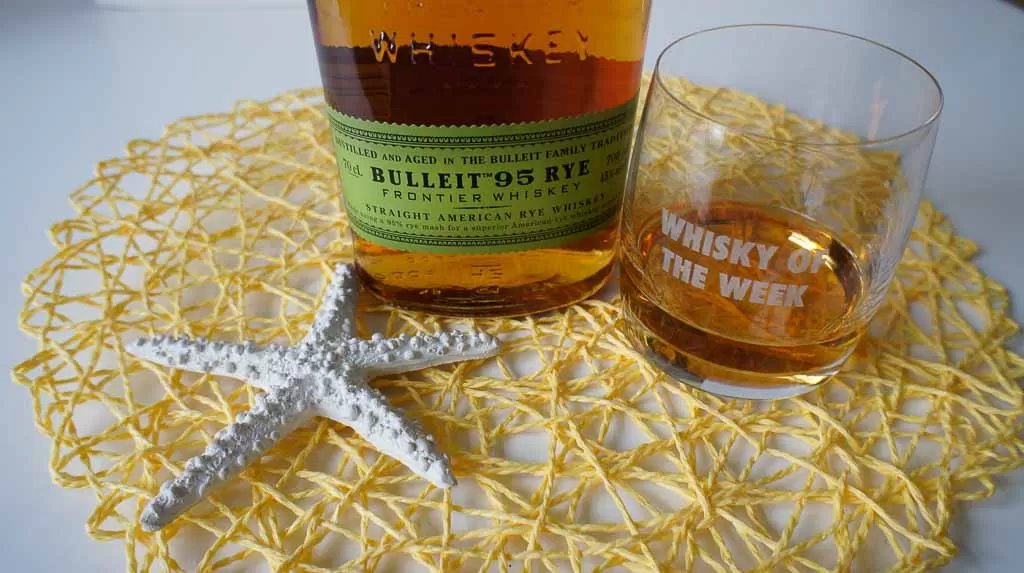
Introduced in 2011, Bulleit Rye whiskey quickly became one of the brand’s most popular releases. It uses a mash bill of 95% rye and 5% malted barley.
Although it also carries no age statement, it is generally believed to be matured for around five to six years in new charred American oak barrels.
The whiskey is widely reported to be sourced from Indiana and uses the famous 95% rye mash bill, which has become popular among American rye enthusiasts.
Despite its quality, Bulleit Rye remains very affordable, and it is available on Amazon. The Rye pairs well with pulled pork, dark chocolate and hot chicken wings.
The Comparison
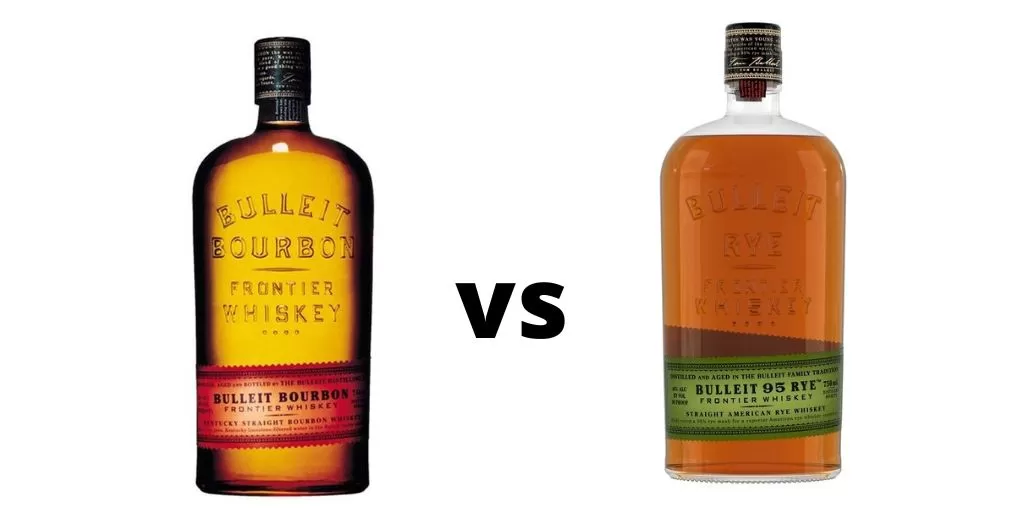
| Bulleit Bourbon | Bulleit Rye | |
|---|---|---|
| Type | Bourbon whiskey | Rye whiskey |
| Mashbill | 68% corn, 28% rye, and 4% malted barley | 95% rye and 5% malted barley |
| ABV | 45% | 45% |
| Colour | Light amber | Light golden caramel |
| Nose | A bold spicy nose followed by vanilla, nutmeg, toasted wood and a toffee pudding sweetness. There is a subtle creamy caramel note | Sweet and fresh. Cherries and vanilla with hints of grain and toasted oak. Subtle spices with hints of cinnamon and cloves |
| Palate | Rich and chewy, it is brimming with spice that never overwhelms. There are notes of toffee, vanilla, and a touch of oily wood. In the background, there are subtle hints of orange and freshly baked sugar biscuits with nutmeg | Caramel sweetness is followed by fresh fruit before the spicy notes. Rye spices mingle with overripe cherries, dry-roasted peanuts, and crunchy grain. There are hints of vanilla, cinnamon, pepper, and cloves |
| Finish | The finish is long and lingering. Bold notes of mild spice, caramel and subtle hints of oak | A spicy rye finish with cinnamon, allspice and vanilla. Medium length |
| My Rating | Excellent | Excellent |
| Food Pairing | Pecan pie and bacon-wrapped dates | Pulled pork and dark chocolate. |
Much like my comparison between Jack Daniel’s Old No. 7 and Jack Daniel’s Rye, this tasting clearly demonstrates just how much influence the mash bill has on the finished whiskey.
Surprisingly, Bulleit Bourbon initially comes across as the spicier whiskey. Vanilla, nutmeg and cinnamon arrive first before rich layers of caramel and toffee begin to soften the aroma.
Bulleit Rye opens with sweeter notes of cherries and cereal grains before gradually revealing cracked black pepper, cloves and rye spice. This is where the two whiskies begin to separate.
The bourbon delivers a wonderfully balanced combination of vanilla, freshly baked cookies, caramel and toffee, supported by gentle baking spices that never overpower the sweetness. The rye immediately feels more assertive.
It opens with sweet fruit and caramel before roasted peanuts, orange peel and bold rye spice quickly dominate the palate. As the whiskey develops, the sweetness recedes, allowing layers of pepper, grain, and baking spices to take over.
Final Verdict
This comparison perfectly demonstrates why mash bills matter. Despite sharing the same producer, similar maturation and comparable age, these two whiskies deliver completely different drinking experiences.
If you enjoy sweeter notes of vanilla, caramel and toasted oak, Bulleit Bourbon is likely to be your favourite. If, however, you prefer black pepper, grain, herbal complexity and a bigger hit of spice, Bulleit Rye is the clear winner.
Personally, I still lean towards Bulleit Bourbon because my palate naturally gravitates towards sweeter bourbons. John, on the other hand, much prefers the Bulleit Rye whiskey, appreciating its bold rye spice and drier finish. That’s the beauty of tasting whiskey side by side: there’s no right answer, only the one that suits your palate.
If you’re a rye whiskey fan, you might also enjoy my comparison between Bulleit Rye and Sazerac Rye whiskey, where I see how two excellent American ryes stack up against one another.
Also Read: Johnnie Walker Green vs Blue Label Whisky
Disclaimer: As an Amazon Associate, I earn from qualifying purchases. I may receive a commission if you click on a link and make a purchase.
