One of the most recognisable bottles of bourbon on my shelf is Maker’s Mark. Thanks to its iconic red wax seal, you can spot this bottle from across the room. Today, I’m putting Maker’s Mark vs Maker’s 46 head-to-head to find out exactly what separates these two popular Kentucky bourbons.
Unfortunately, the Maker’s Mark range available in South Africa is currently limited to just these two expressions. That, however, makes choosing between them a little easier. The question is: what exactly is the difference between these two bottles, and is Maker’s 46 worth the extra money?
At first glance, they appear very similar. Both bourbons share the same mash bill, mature in the same warehouses, and begin life as the same whiskey. The key differences come later. Maker’s 46 spends additional time in the barrel and undergoes a unique finishing process involving heavily seared French oak staves.
There is also a slight difference in ABV and price. But does the extra wood influence create a noticeable improvement in the glass? To find out, I tasted them side by side.
The Story Behind Maker’s Mark
Maker’s Mark is distilled in Loretto, Kentucky, where production began after T. William “Bill” Samuels Sr. purchased the historic Burks’ Distillery in 1953. His goal was simple: create a smoother, more approachable bourbon that would stand apart from the spicier styles dominating the market.
Much of the brand’s success can also be credited to his wife, Marjorie “Margie” Samuels. She named the whisky, designed the distinctive label, and created the famous red wax-dipped bottle top that has become synonymous with the brand.
The first bottle of Maker’s Mark was released in 1958, and it remains one of the most influential bourbons ever produced. It is owned by Bean Suntory. In many ways, it is the bourbon that made me fall in love with the category. It’s a regular feature in my whisky cabinet and often finds its way into both cocktails and evening pours.
Also Read: Maker’s Mark vs Woodford Reserve
Maker’s Mark Bourbon Whiskey
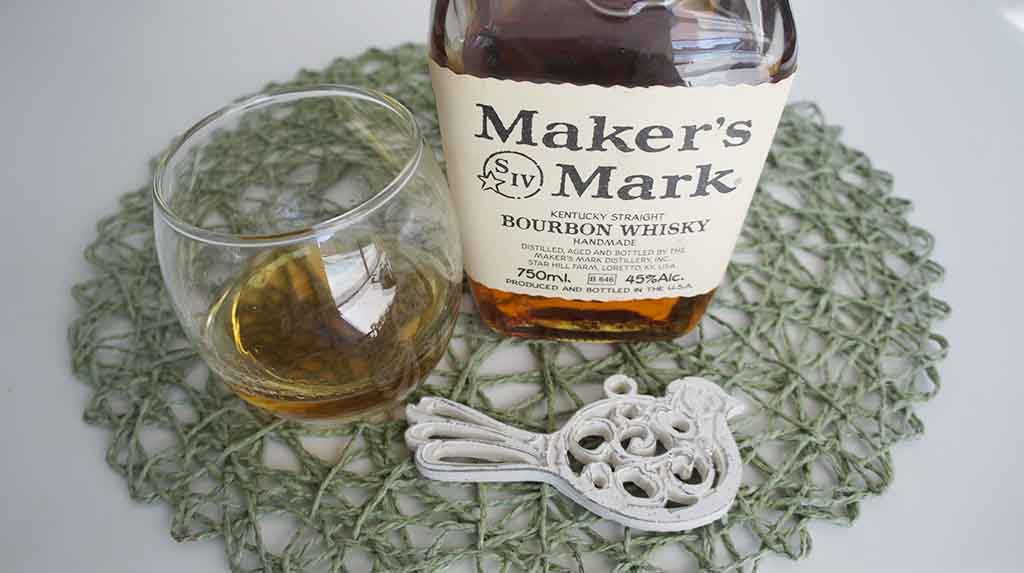
The Maker’s Mark Kentucky Straight bourbon whiskey carries no age statement. Instead, the distillery bottles it when the tasting panel agrees it has reached the desired flavour profile, typically at around six years of age.
One of the defining features of Maker’s Mark is its mash bill. Unlike many bourbons that use rye as the secondary grain, Maker’s Mark replaces rye with soft red winter wheat. The recipe consists of approximately 70% corn, 16% wheat, and 14% malted barley.
This wheated mash bill creates a softer, sweeter bourbon with notes of vanilla, caramel, cherries, cinnamon, and gentle oak. It is exceptionally approachable and serves as an excellent introduction to American bourbon for newcomers exploring the category. Food pairings with this bourbon include smoky BBQ, pecan pie and spagetti and meatballs.
Maker’s 46 Bourbon Whiskey
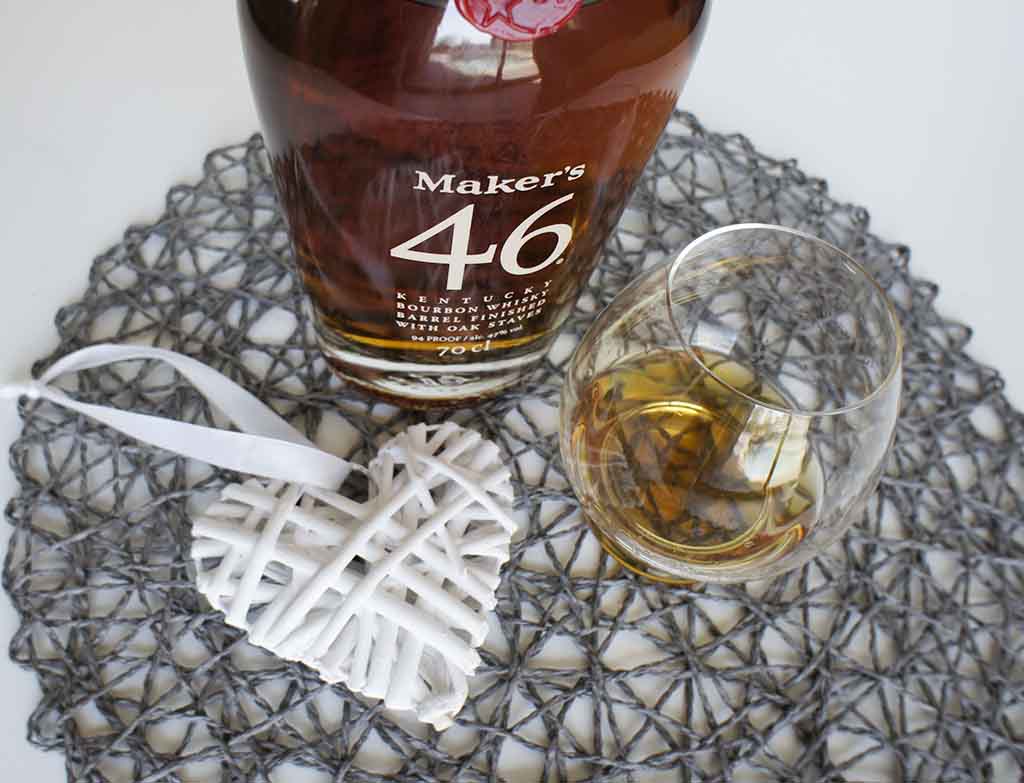
According to the distillery, Maker’s 46 was the first new permanent expression added to the range since the original Maker’s Mark was introduced in the 1950s. Released in 2010, the goal was not to reinvent the bourbon but to enhance it with additional depth, spice, and complexity.
Maker’s 46 begins as standard Maker’s Mark bourbon. Once mature, heavily seared French oak staves are inserted into emptied Maker’s Mark barrels. The original bourbon is then returned to these barrels and allowed to age further.
The result is a richer, more oak-forward whiskey that retains the signature sweetness of Maker’s Mark while adding layers of toasted wood, baking spice, and complexity. This bourbon pairs well with BBQ pork belly, chocolate covered almonds and quiche Lorraine.
Interestingly, the number “46” refers to the stave experiment that ultimately delivered the flavour profile the development team was seeking. After testing numerous options, experiment number 46 proved to be the perfect match.
Also Read: Maker’s Mark vs Buffalo Trace Bourbon
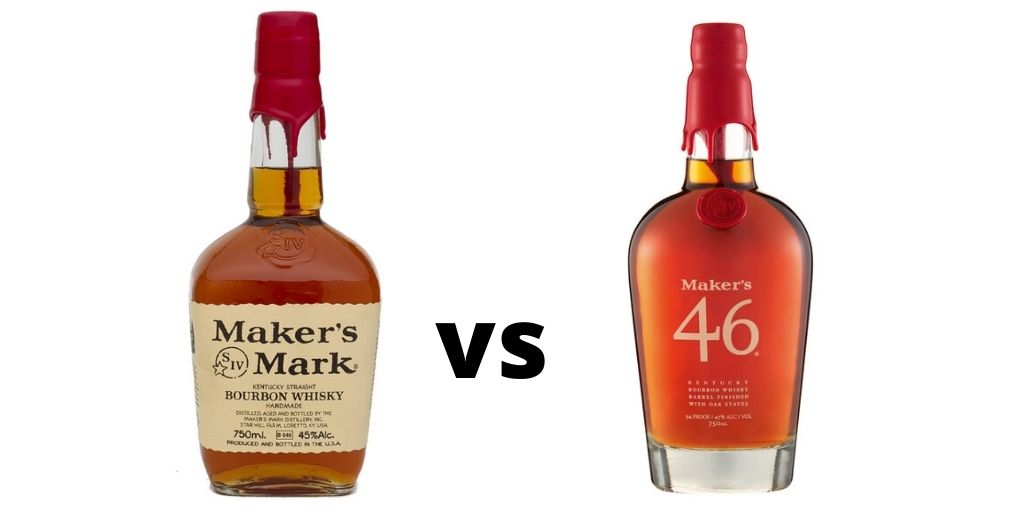
Maker’s Mark vs Maker’s 46 Bourbon Whiskey
| Maker's Mark | Maker's 46 | |
|---|---|---|
| Type | Bourbon whiskey | Bourbon whiskey |
| Mashbill | Red winter wheat (16%), corn (70%), malted barley (14%) | Red winter wheat (16%), corn (70%), malted barley (14%) |
| ABV | 45% | 47% |
| Colour | Light golden copper | Dark polished copper |
| Nose | Cherries, brandied fruit, toasted wood and vanilla spice. Adding a few drops of water brings out more spice and woody notes. | Rich and sweet with heaps of plump maraschino cherries, oak, vanilla and caramel. There are hints of honey and buttery cinnamon toast. |
| Palate | Full of vanilla, followed by sweet cherries and fresh red fruit. Cinnamon and toasted oak. A few drops of water brings butterscotch and warming nutmeg. Delicious and very easy drinking. | Rich and creamy. There are notes of oak, vanilla cinnamon, all perfectly balanced. The Maker's 46 has a big mouthfeel. It is smooth like creamed honey. After the second sip, butter toffee, toast and hints of pepper show up. |
| Finish | Long with hints of sweetness, vanilla and caramel. | Long and lingering and ends in notes of caramel, pepper and vanilla. |
| My Rating | Excellent | Excellent |
| Food Pairings | Smoky BBQ, pecan pie and spaghetti and meatballs | BBQ Pork belly, chocolate covered almonds and quiche Lorraine |
Starting with the nose, both bourbons initially present very similar aromas. Cherries, vanilla, caramel sweetness, and oak are evident in both glasses. Given a little time, however, Maker’s 46 begins to stand out for its richer, creamier oak influence and a more pronounced spicy character. Especially cinnamon and hints of nutmeg come through more defined on the Maker’s 46.
On the palate, Maker’s Mark delivers exactly what fans have come to expect. Sweet vanilla, ripe cherries, fresh red plums, cinnamon spice, and soft oak combine to create an easy-drinking and highly enjoyable bourbon.
Switching to Maker’s 46, the impact of the additional maturation becomes immediately apparent. The mouthfeel is noticeably bolder, richer and oilier. The cherry notes are more concentrated, while toasted oak, baking spices, and creamy vanilla create a more layered and sophisticated experience. It is also spicier with more pepper notes.
The finish is where the Maker’s 46 truly shines. The flavours linger longer, evolving with waves of oak, spice, and sweet bourbon richness that keep you reaching for another sip.
Pricewise, both of these bourbons retail in the affordable category. The Maker’s Mark is slightly more affordable than the Maker’s 46. They are both available on Amazon, and I regularly see them on sale.
Final Verdict
When comparing Maker’s Mark vs Maker’s 46, both bottles deserve a place in a bourbon lover’s collection. Standard Maker’s Mark remains one of the best-value bourbons available and an ideal everyday pour.
However, Maker’s 46 takes everything that makes Maker’s Mark great and elevates it. The additional oak influence, richer texture, and increased complexity make it feel more complete and refined.
While both bourbons are excellent, the additional time and craftsmanship that go into Maker’s 46 are clearly evident in the final product. If I could only choose one, Maker’s 46 would be the bottle reaching my glass most often.
Which one would you choose: Maker’s Mark or Maker’s 46?
Disclaimer: As an Amazon Associate, I earn from qualifying purchases. I may receive a commission if you click on a link and make a purchase.
Also Read: Johnnie Walker Red vs Black Label Whisky

I met Bill samuels Jr when I visited the Makers distillery about 5 years ago. He was very unassuming and asked how were enjoying our visit. He then went on to tell us 46 was his project, and they “let him hang around”. It’s one of my favorites and a must to have.
How do I find out the year my bottle of maker 46 was bottled
Look on the bottle.